
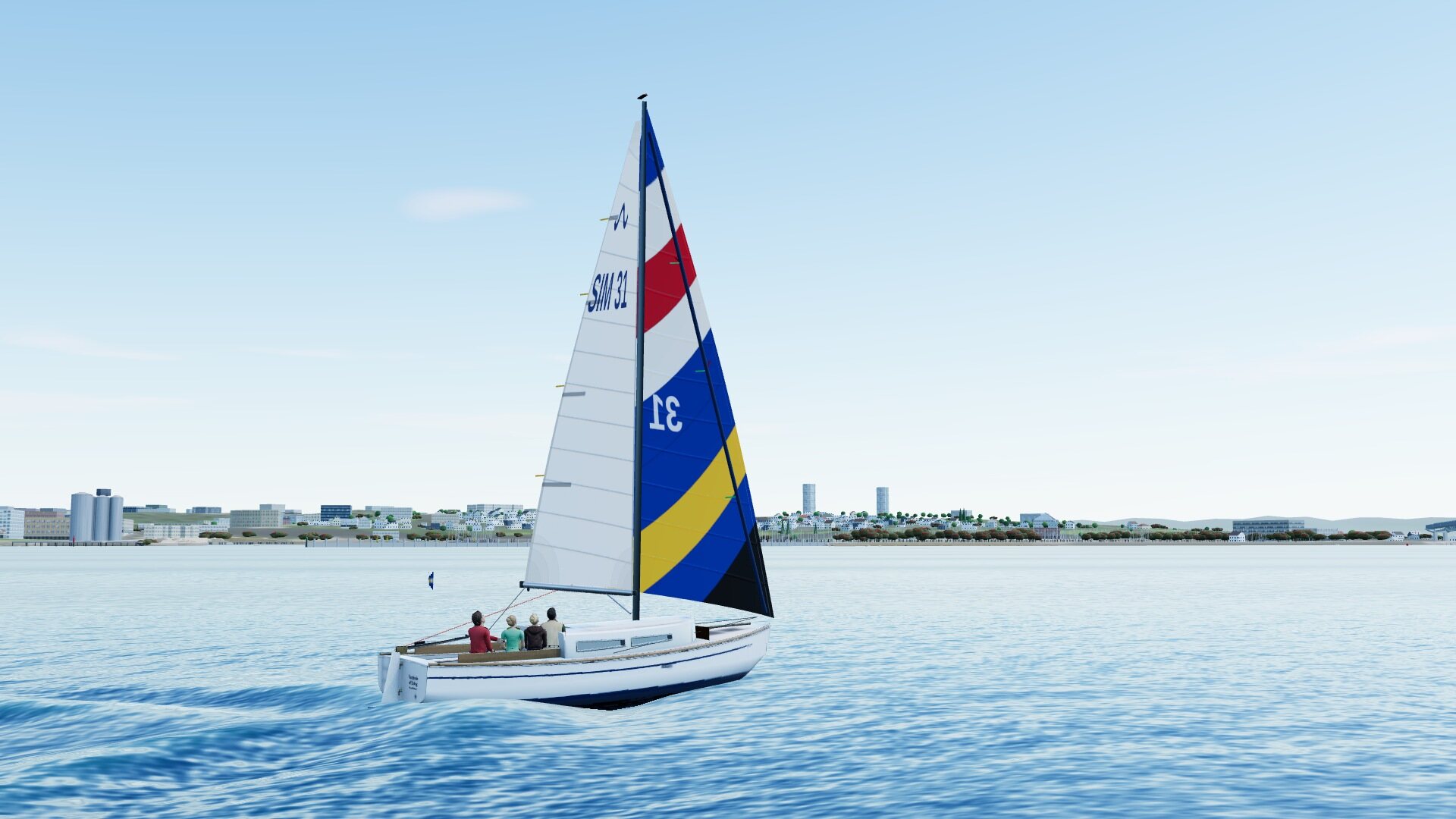
When you tack, the bow turns through the wind and the sails flap as you go round. When you gybe, the stern turns through the wind instead, and the sails stay full the whole time, which is why the boom can come across so fast.
Why gybe?
Gybing is how you change from one side to the other when the wind is behind you. If the place you want to get to is downwind, you’ll often get there sooner by sailing on a broad reach, first on one gybe and then on the other, than by running straight there. A broad reach is faster than a dead run and the boat is steadier, so it often pays to zigzag downwind as you do upwind.
The controlled gybe
A safe gybe depends on the mainsheet. The further the boom has to travel across the boat, the faster it is moving when it reaches the other side, so bring it in towards the middle before you turn.
- Get ready. Start on a broad reach. Check the water around you is clear, and call “Ready to gybe.” Everyone keeps their head low, well out of the way of the boom and the mainsheet.
- Bear away to a run, with the wind almost directly behind you.
- Pull the mainsheet in, bringing the boom in towards the middle of the boat.
- “Gybe-oh.” Call it as you start to turn, and turn slowly. As the stern passes through the wind the boom swings across, but only a short way.
- Ease the mainsheet out smoothly on the new side, and straighten the tiller so the boat doesn’t swing round towards the wind.
- Bring the jib across, trim, and you’re on a broad reach on the new gybe.
Sailing by the lee
Take care whenever you are sailing dead downwind. Steer a little too far and the wind gets round behind the mainsail, onto what was its leeward side. This is sailing by the lee, and it is when accidental gybes happen. The signs are the boat rolling and feeling unsettled, the leech of the mainsail starting to lift and flutter, and the jib falling limp and then trying to cross to the other side. Turn back towards the wind a little, away from the side the boom is on, until she settles.
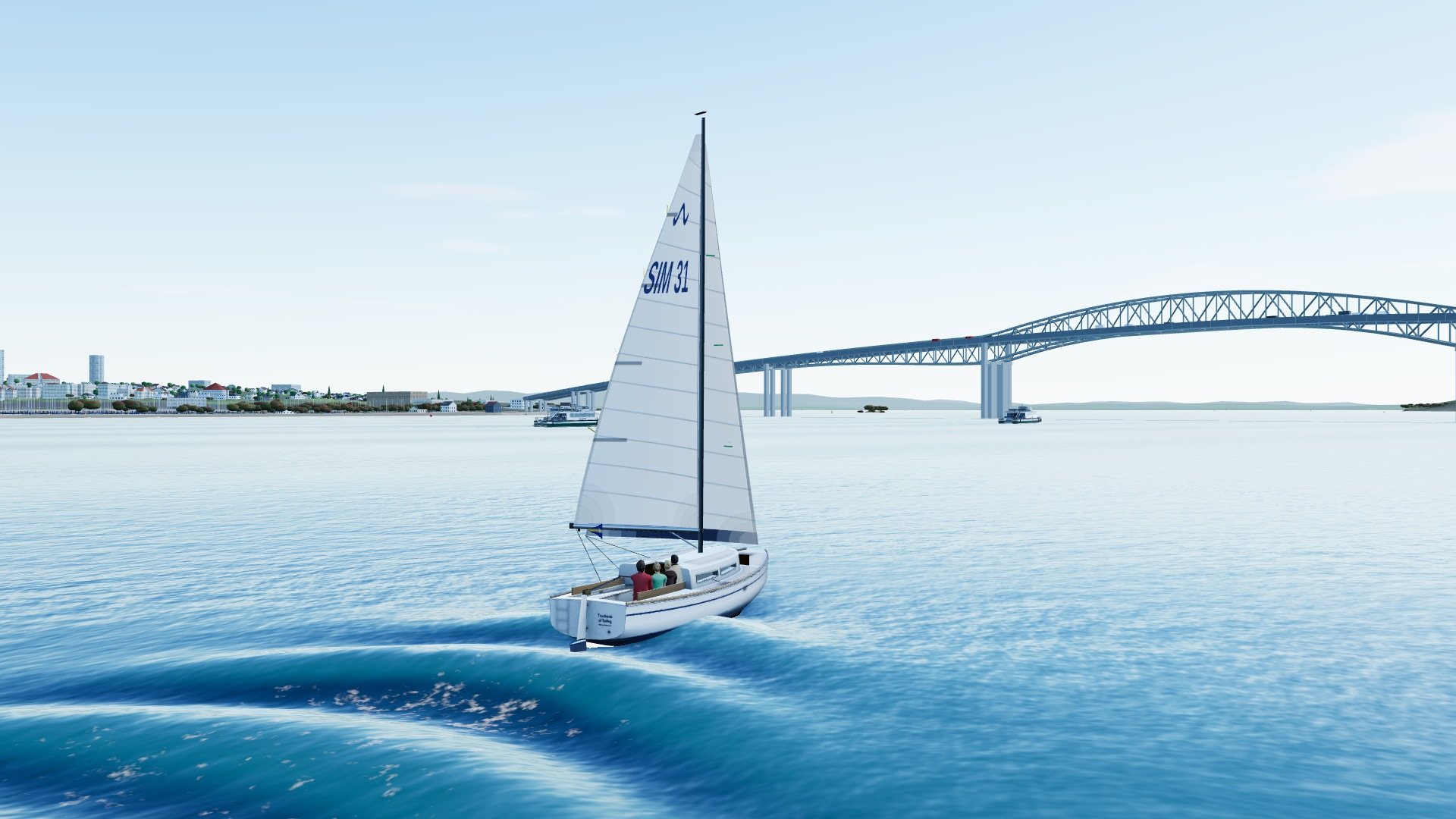
Accidental gybes
An accidental, or crash, gybe happens when the boom comes across without anyone meaning it to, usually with the mainsail let right out. The boom swings right across the boat at head height, through as much as 160 degrees, hits the end of its travel with a bang, and the boat can be thrown round into the wind. In stronger winds it can break the boom or the rig, and it can easily hurt someone.
On a long run, many crews rig a preventer, a line from the end of the boom forward to a block at the bow and back to the cockpit. It holds the boom out and stops it crossing if the boat gybes by accident. It must be possible to release it quickly from the cockpit.
Spinnakers
Off the wind, many boats set a spinnaker, a large, light, balloon-shaped sail flown in front of the boat in place of the jib. The boat in the simulator carries an asymmetric spinnaker, which is tacked down at the bow, on a short bowsprit, like a big jib. It is gybed by letting the old sheet go and pulling in the new one, with the sail passing round in front of the forestay. It adds a lot of speed on a broad reach, but also a lot of power, so take it down early if the wind builds.
Check yourself
Answer each one from memory before you look at the answer; recalling it is what fixes it in your mind. Tap an answer to check it.
-
In a controlled gybe, what do you do with the mainsheet before the stern passes through the wind?
Try it in the simGybing safelyShow the answer
D. Pull it in, so the boom only has a short way to swing. The less distance the boom has to travel, the more gently it crosses. Once it is over, ease the sheet out smoothly on the new side.
-
Roughly what wind angles does the asymmetric spinnaker work at?
Try it in the simFlying the spinnakerShow the answer
C. From a broad reach to a run, about 100 to 160°. Too close to the wind it overpowers her and can cause a broach; too far off it collapses behind the main.
-
Running, what does sailing “by the lee” mean?
Try it in the simGybing safelyShow the answer
A. The wind is coming from the same side as the boom. By the lee, the wind is getting behind the mainsail and can throw the boom across. Head up a little until the wind is back on the other side.
-
Where do you hoist the kite?
Try it in the simFlying the spinnakerShow the answer
A. Well off the wind, in the lee of the mainsail, with the jib furled. Bear away first so the mainsail shelters the kite as it goes up; then it fills cleanly instead of wrapping or flogging.