
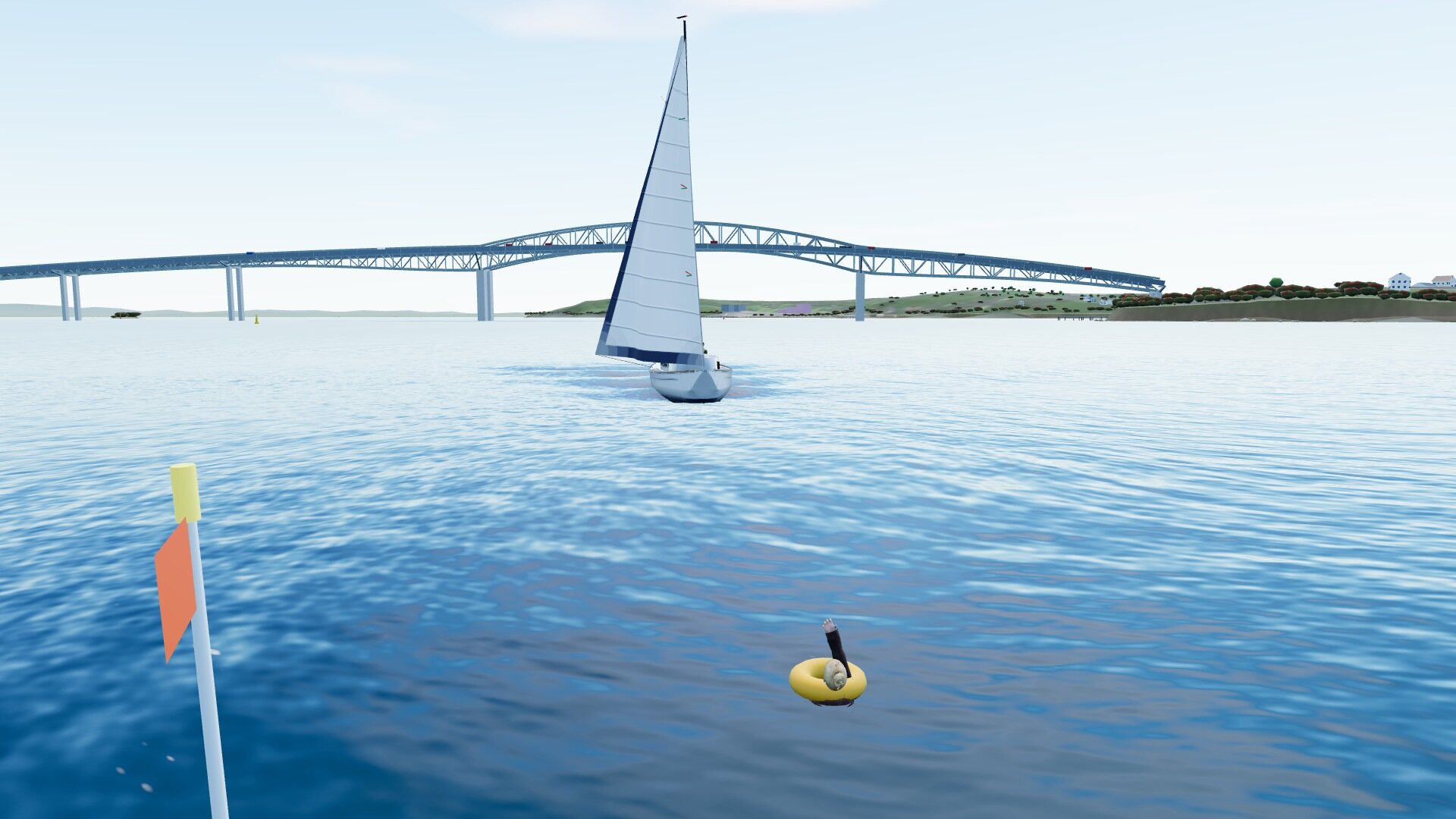
The best way to deal with someone falling overboard is to stop it happening. Wear lifejackets, clip on at night and in rough weather, and keep one hand for yourself and one for the boat. Every crew should still know the recovery drill, and practise it with a fender or a bucket until they can do it without thinking.
Shout, point, throw
- Shout “Man overboard!” so the whole crew knows.
- Point: one person points at the person in the water and keeps pointing, and does nothing else. A head among waves is very easy to lose.
- Throw the lifebuoy and the dan buoy, a floating pole with a flag, so the person has something to hold and you have something bigger to look for. Press the MOB button on the plotter or GPS to mark the position.
Then send a Mayday straight away. If you get the person back quickly you can cancel it.
Getting back to them
There are several ways to get back to a person in the water, and the right one depends on the boat, the wind and the crew. The simplest under sail is the beam-reach method. Keep sailing on a beam reach for several boat lengths, to give yourself room to turn. Tack, and come back on a broad reach, aiming to pass a little downwind of the person. When the person bears about 60 degrees off the wind from you, turn towards them, so that you make the final approach on a close reach.
Another is the quick stop: turn straight up into the wind and tack at once without letting go of the jib sheet, so that the jib is backed and the boat stops, hove to, close to the person. From there you can sail a short loop back to them, or motor back. Under engine, take the sails down or furl them, and check that no ropes are trailing in the water, where they could wrap round the propeller, before you start the engine. Always put it in neutral well before you get close.
The final approach
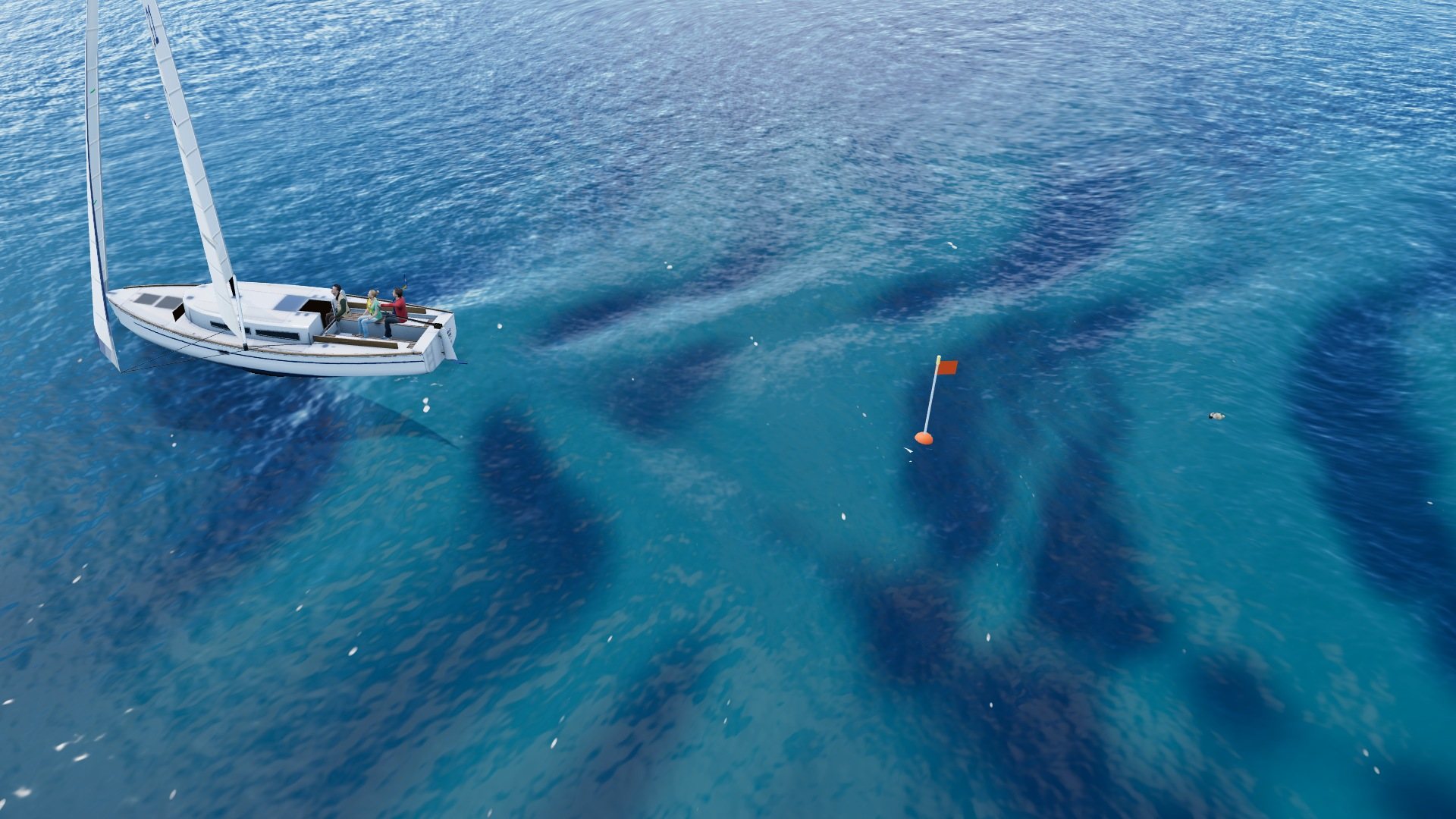
The final approach is made on a close reach because on that point of sail you can control your speed: let the sails out to slow down, pull them in to speed up. On a broad reach or a run the sails can’t be let out far enough to spill the wind, so the boat can’t be slowed. Over the last few boat lengths let the sails right out and bring the boat to a crawl. Aim to stop right beside the person, level with the middle of the boat.
Getting them aboard
Get a line to them first, so they can’t drift away again. Getting someone back aboard is often the hardest part of the whole drill, especially if they’re cold, tired or heavy in wet clothes. A boarding ladder, a halyard clipped to their lifejacket and winched in, or a sling all help. Once they’re aboard, get them warm and dry and watch them closely. Call for medical help on the VHF if they’re injured or very cold, or if they have breathed in water, since problems from that can develop hours later.
Check yourself
Answer each one from memory before you look at the answer; recalling it is what fixes it in your mind. Tap an answer to check it.
-
Someone falls overboard. What three things do you do straight away?
Try it in the simMan overboard!Show the answer
B. Shout “man overboard”, point at them and keep pointing, and throw them the lifebuoy or dan buoy. Shout, point, throw. A head in the water is lost among the waves within seconds, so one person does nothing but point.
-
On the final approach, which point of sail lets you slow right down beside them?
Try it in the simMan overboard!Show the answer
D. A close reach, so you can ease the sails and stop. On a close reach you can spill wind by easing the sails, slow to a crawl and still steer.
-
Coming back to the person under engine, what must you do?
Try it in the simMan overboard!Show the answer
A. Put it in neutral well before you get close. Never let a turning propeller near a person in the water. Neutral early, and glide the last part.
-
What is the most common mistake when returning to someone in the water?
Try it in the simMan overboard!Show the answer
B. Coming back too fast and sailing straight past. Too fast and you overshoot, then you have to go all the way round again while they get colder.