
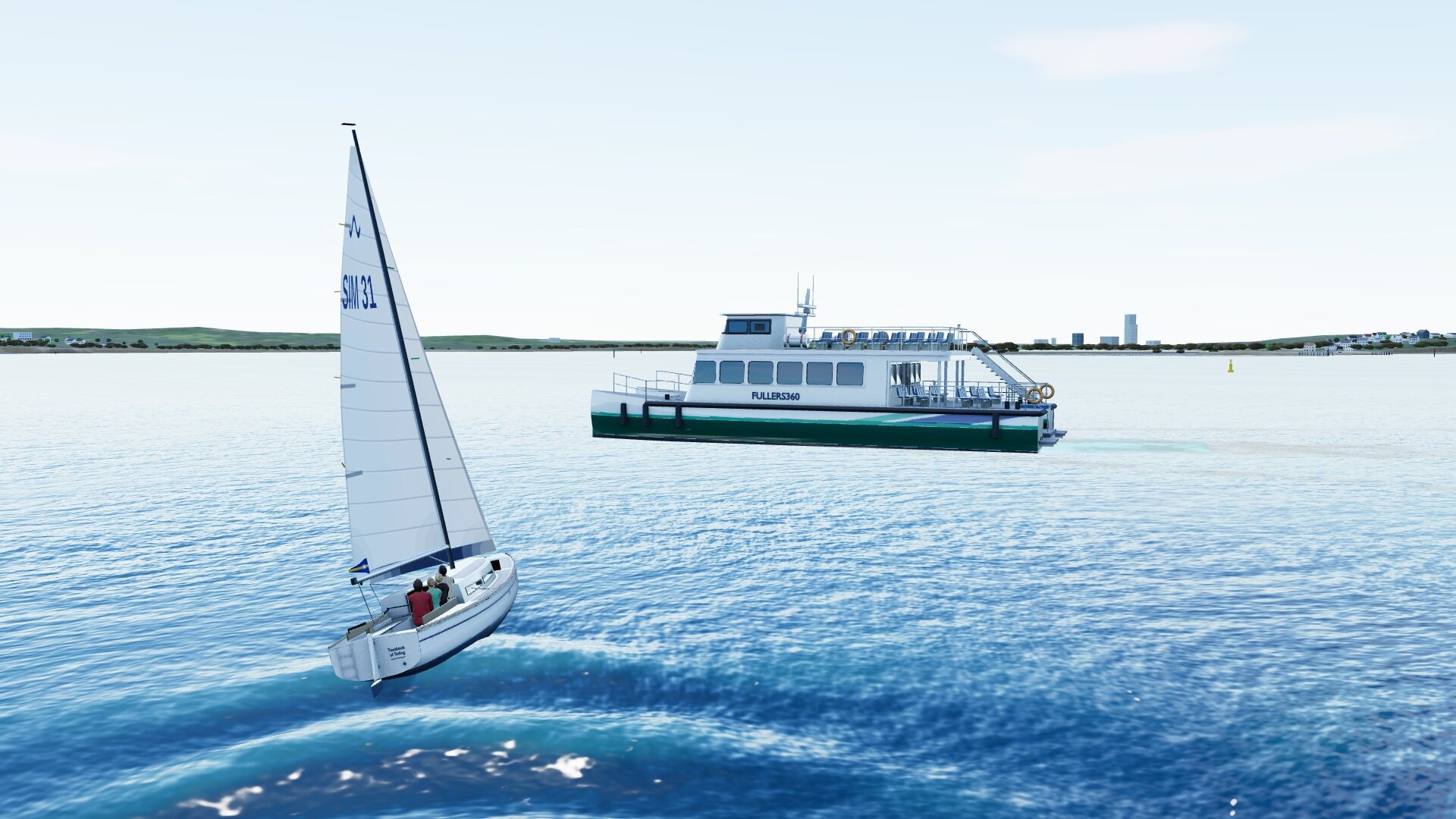
The rules exist to make every encounter predictable. One boat, the give-way vessel, keeps out of the way; the other, the stand-on vessel, holds her course and speed so the first can tell what she’s doing.
Keeping a lookout
Every vessel must keep a proper lookout, all round and all the time, by sight and by hearing (rule 5). On a sailing boat the jib hides a large part of the view to leeward, so make a habit of looking under it.
To tell whether you’re on a collision course with another vessel, watch her bearing (rule 7). Hold your own course steady, line her up against something fixed on your own boat, such as a stanchion or a winch, and watch her for a minute without moving your head. If she moves ahead, she will pass ahead of you; if she moves aft, she will pass behind; if she stays in the same place while getting closer, there’s a risk of collision and someone needs to act. With a big ship, a tow, or a boat that’s already close, there can be a risk even when the bearing is changing, so keep well clear.
Two sailing boats
- Opposite tacks: the boat with the wind on her port side, the port-tack boat, keeps clear of the one on starboard tack (rule 12). This is why racing sailors call out “Starboard!”
- Same tack: the boat to windward keeps clear of the boat to leeward (rule 12).
- Overtaking: any boat overtaking another keeps clear, whether she’s sailing or under power (rule 13).
If you’re on port tack and see a boat to windward of you but can’t tell which tack she is on, assume she’s on starboard and keep clear.
Under power
As soon as the engine is driving the boat you count as a power-driven vessel, even with the sails up, and different rules apply.
- Head-on: both boats turn to starboard, and pass port side to port side (rule 14).
- Crossing: the boat that has the other on her own starboard side gives way, preferably by turning to starboard and passing astern of her (rule 15).
In general a power-driven vessel keeps clear of one under sail, and a sailing vessel keeps clear of a vessel fishing with nets or trawls (not one trolling lines), a vessel restricted in her ability to manoeuvre, such as a dredger, and a vessel not under command (rule 18).
Big ships and narrow channels
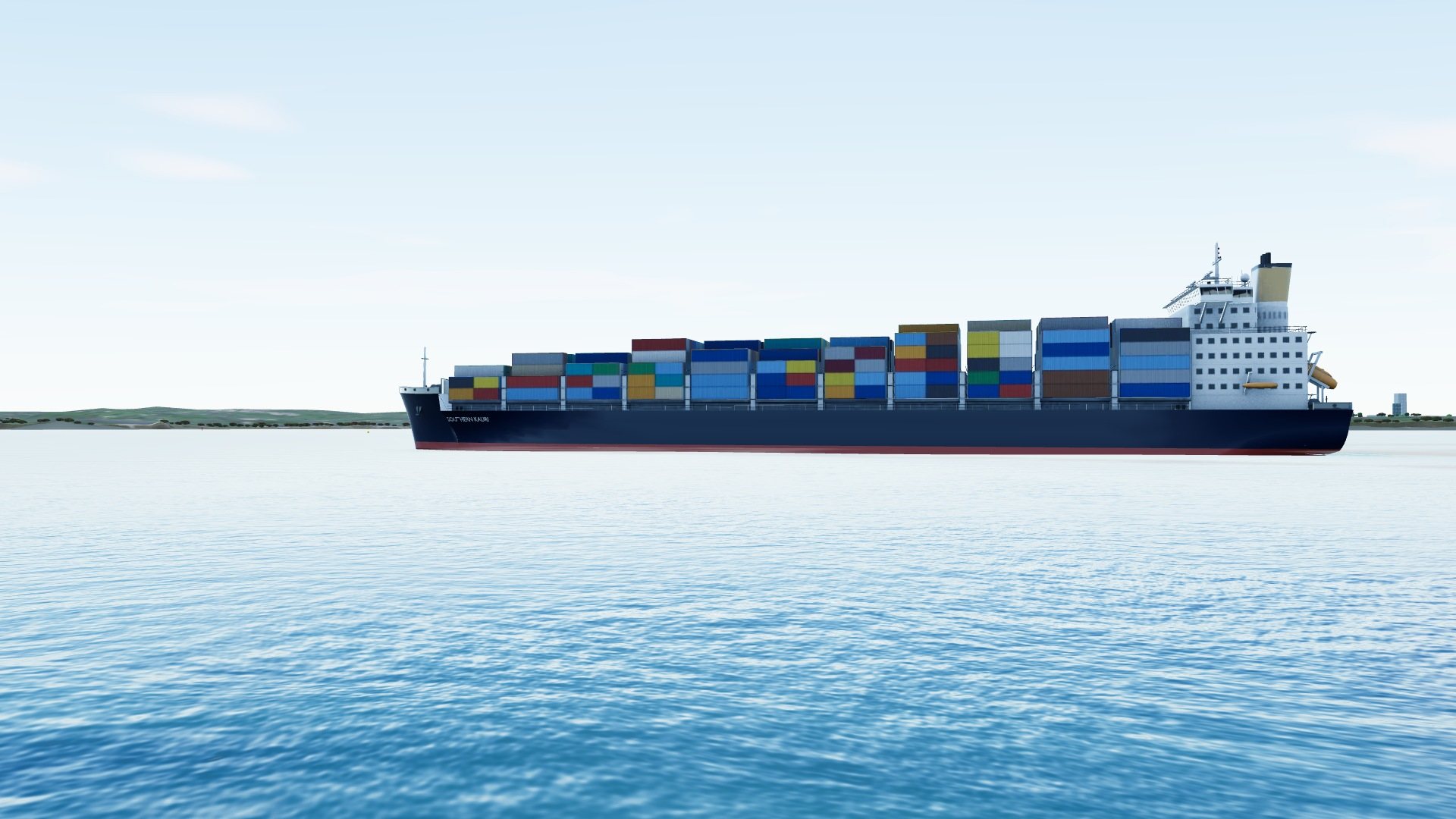
In a busy harbour the most important exception is for big ships. In a narrow channel, a sailing boat, or any boat under 20 metres, must not impede a vessel that can navigate safely only within the channel (rule 9). In Auckland the navigation bylaw goes further: in the pilotage area, which takes in the port and its approaches, a small boat must not impede a large ship anywhere, in a channel or out of it. A container ship can’t stop or turn quickly, and from her bridge a small yacht close under her bow may be out of sight altogether. Keep well clear, and make your intentions obvious early. Give the ferries plenty of room as well. They are fast, and near the wharves they need the water to manoeuvre.
How to give way
If you’re the give-way vessel, act early, and make your turn big enough that the other skipper can see what you’re doing. A series of small changes of course is hard to read and should be avoided (rule 8). Avoid crossing ahead of the other boat. If you’re the stand-on vessel, hold your course and speed (rule 17). If it becomes clear that the other boat isn’t keeping clear, you may act to avoid a collision yourself, and once she is so close that she can’t avoid a collision on her own, you must.
Sound signals
The first three are made by a power-driven vessel when she alters course or goes astern in sight of another vessel (rule 34). The fog signals are made at intervals of not more than two minutes (rule 35).
| Signal | Meaning |
|---|---|
| One short blast | I am altering course to starboard |
| Two short blasts | I am altering course to port |
| Three short blasts | I am operating astern propulsion (going astern) |
| Five or more short blasts | I don’t understand your intentions, or doubt you are taking enough action |
| One prolonged blast | Approaching a blind bend; or, in fog, a power-driven vessel making way through the water |
| Two prolonged blasts (in fog) | A power-driven vessel under way but stopped |
| One prolonged, two short (in fog) | A sailing vessel, or one fishing, towing, not under command, restricted in her ability to manoeuvre or constrained by her draught |
Lights at night
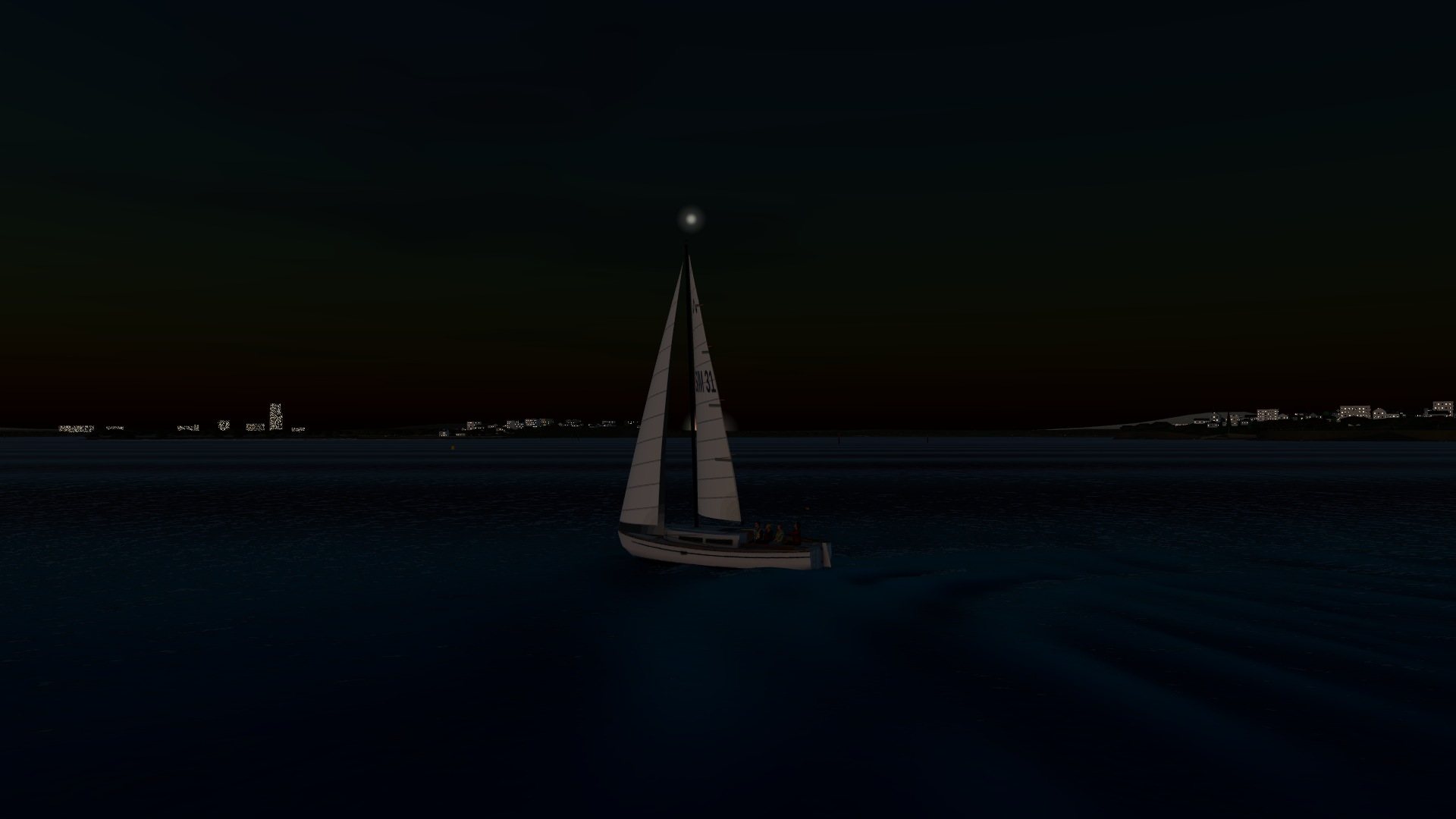
Between sunset and sunrise, and in poor visibility, every vessel shows lights that say what she is and which way she’s heading. A sailing boat shows a red sidelight to port, a green one to starboard, and a white stern light. A boat under 20 metres may show all three from one tricolour lantern at the top of the mast instead, but only while she is sailing. Under power she switches off the tricolour, shows her sidelights and stern light, and adds a white masthead light shining forward. So if you see red and green together, with a white light above, a power-driven vessel is heading straight for you.
Fog
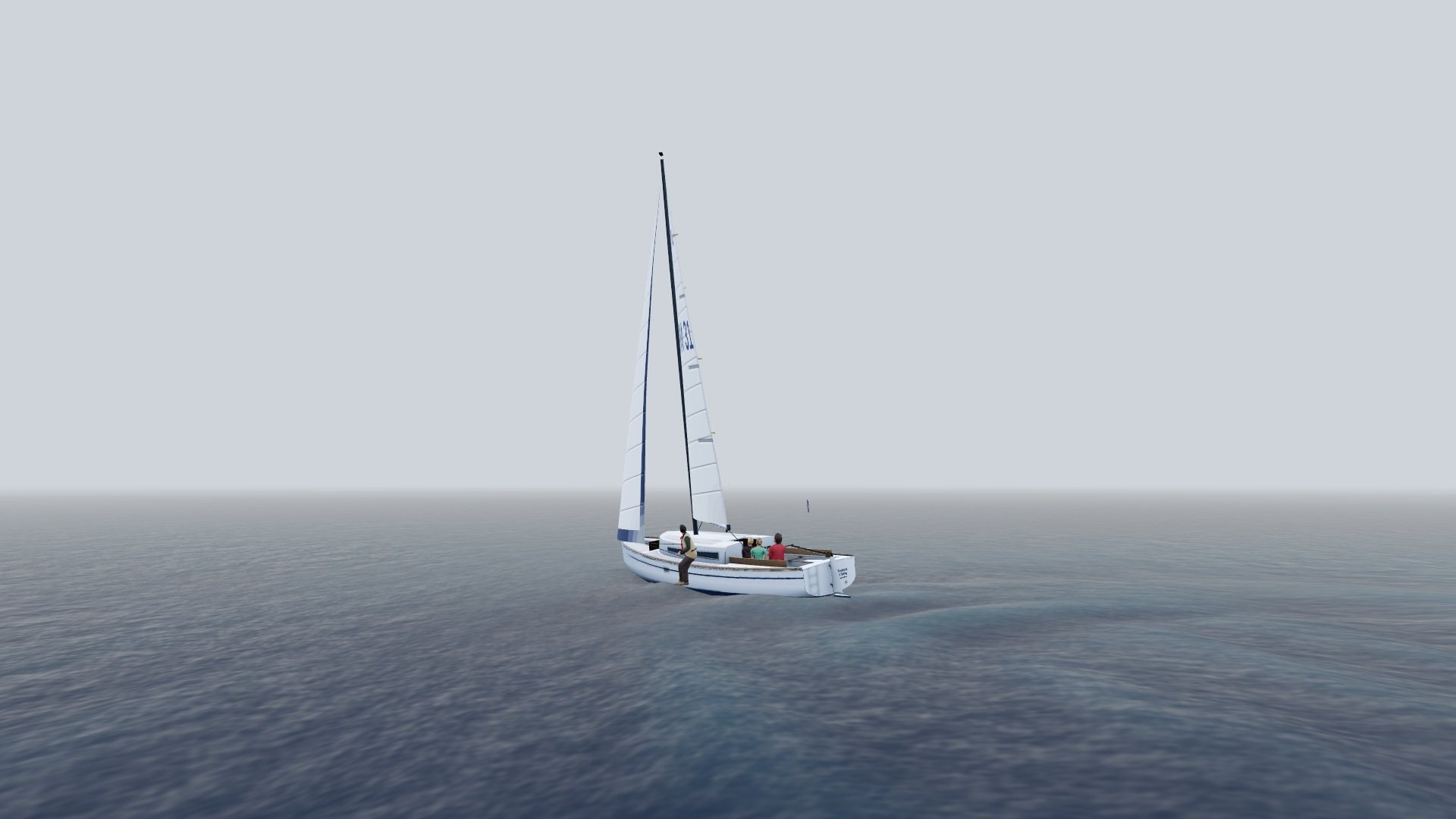
In restricted visibility, go at a safe speed (rule 6): slow enough to stop in the distance you can see. Sound the fog signal, keep a lookout by ear as well as by eye, and get out of the shipping channels. Switch on the navigation lights, and if you have radar, use it. If you hear another vessel’s fog signal forward of the beam, slow down to the least speed at which you can still steer, and stop if you need to (rule 19).
Check yourself
Answer each one from memory before you look at the answer; recalling it is what fixes it in your mind. Tap an answer to check it.
-
Two sailing boats meet on opposite tacks. Which one keeps clear?
Try it in the simCOLREGs: who gives wayShow the answer
C. The one on port tack. Port tack gives way to starboard tack (rule 12). Alter early and clearly, usually by bearing away behind her.
-
At night you see red and green sidelights together and no white light above them. What is it?
Try it in the simNavigation lights at nightShow the answer
A. A sailing vessel heading straight for you. Under sail a vessel shows sidelights and a stern light, but no masthead light. Both sidelights at once means she is pointing at you.
-
What is a safe speed in fog?
Try it in the simFog: restricted visibilityShow the answer
C. Slow enough to stop within the distance you can see. Rule 6 asks for a speed at which you can take proper action and stop in good time. In fog, that means stopping within the distance you can see.
-
Two sailing boats are on the same tack. Which one keeps clear?
Try it in the simCOLREGs: who gives wayShow the answer
A. The windward boat. On the same tack the boat further upwind keeps clear. And any boat overtaking keeps clear of the one she is passing.