
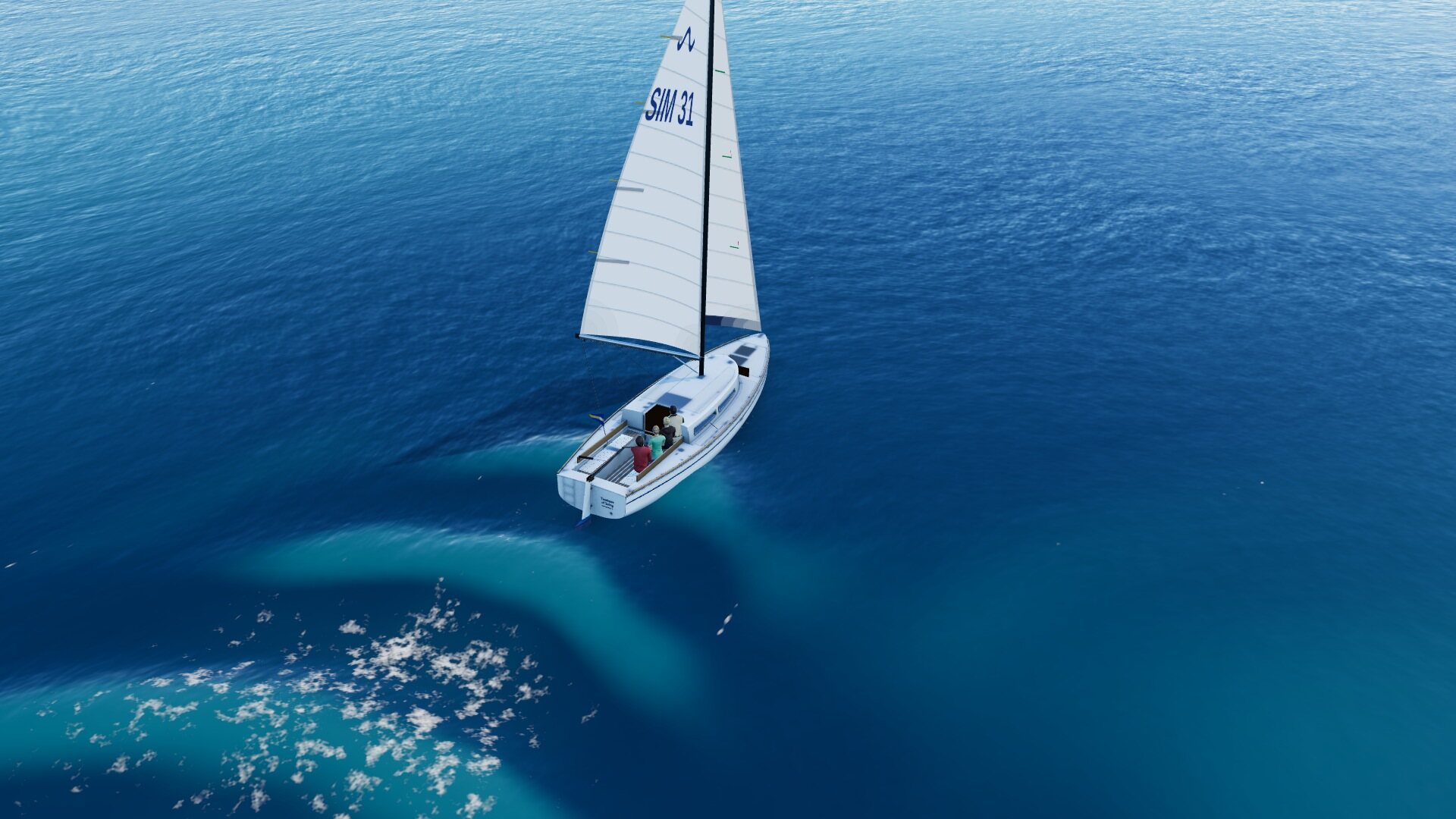
The angle between the direction a boat is heading and the direction the wind is coming from decides most of how she sails: her speed, how much she heels, and how her sails should be set. The different angles are called the points of sail.
The no-go zone
Imagine the wind coming from twelve o’clock. For about 45 degrees either side of it, a sailing boat can’t make any headway at all. Pointed into this area, the no-go zone, the sails cannot take up their curved shape. They flap like a flag, and the boat slows down and stops. A boat that’s stopped head to wind like this is said to be in irons.
Exactly how close to the wind a boat can sail depends on the boat. A racing yacht with good sails might sail at 35 degrees to the true wind; an older cruising boat might struggle to do better than 50. The boat in this book sails close-hauled at about 40 to 45 degrees, and for most purposes 45 degrees is a good figure to remember.
Close-hauled
Just outside the edge of the no-go zone, with the sails pulled in tight, the boat is close-hauled. This is as close to the wind as she’ll go, and it’s how you make progress upwind. Close-hauled, the boat heels most and the apparent wind is at its strongest, so she feels fast, but she is not at her quickest.
Reaching
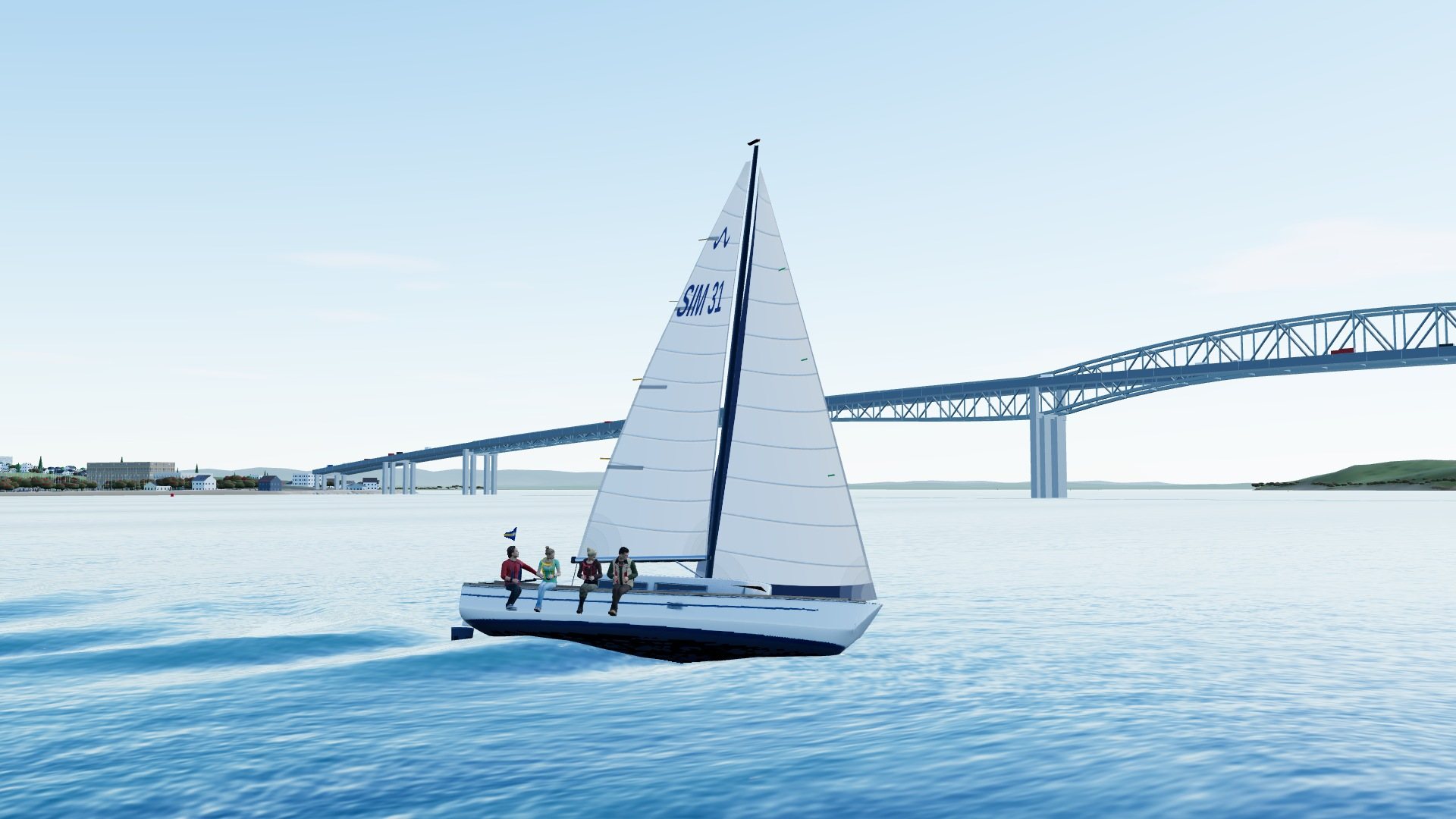
Turn away from the wind and you’re reaching. With the wind about 60 degrees off the bow it’s a close reach; with the wind straight over the side it’s a beam reach; and with the wind coming from behind the beam it’s a broad reach. For most boats the beam reach is the fastest point of sail, and the most comfortable: the boat is fairly upright, easy to steer and forgiving if the sails are not set quite right, which makes it the best point of sail to learn on.
Running
With the wind coming from directly behind, the boat is running. The sails are let right out and the boat is pushed along rather than pulled. It feels calm, because you are travelling with the wind and the apparent wind is light, but it needs care. Steer a little too far and the wind can get round behind the mainsail and swing the boom violently across the boat (Chapter 7).

Setting the sails
The basic rule of sail trim follows from the points of sail: the further you turn away from the wind, the further you let the sails out; as you turn back towards it, you pull them in. Close-hauled, the sails are pulled in tight; on a beam reach they are about halfway out; on a broad reach they are well out, and on a run the mainsail is out as far as the shrouds allow.
Beating to windward
If the place you want to get to is straight upwind, in the middle of the no-go zone, you can’t sail there directly. Instead, you sail close-hauled one way, then turn the bow through the wind and sail close-hauled the other way, in a zigzag. Each turn is called a tack, and each leg of the zigzag is a board. Sailing a zigzag course to windward is called beating.
The side the wind is coming from also gives its name to the tack you’re on. With the wind coming over the starboard side, you are on starboard tack, and the boom is out to port; with it coming over the port side, you are on port tack. The rules of the road in Chapter 13 depend on it.
Check yourself
Answer each one from memory before you look at the answer; recalling it is what fixes it in your mind. Tap an answer to check it.
-
Roughly how close to the true wind can this boat sail?
Try it in the simPoints of sailShow the answer
B. About 45°. For about 45° either side of the wind is the no-go zone: point in there and the sails flap and she stops. Close-hauled is just outside it.
-
You turn from close-hauled to a broad reach. What do you do with the sails?
Try it in the simPoints of sailShow the answer
A. Let them out. The further you turn away from the wind, the further you let the sails out. Turn back towards the wind and pull them in.
-
The wind is coming from straight behind you. What point of sail is that?
Try it in the simPoints of sailShow the answer
D. A run. A run. Watch the boom: with the wind dead astern, a small change can get the wind behind the mainsail and swing the boom across.
-
The place you want to reach is straight upwind. How do you get there?
Try it in the simPoints of sailShow the answer
B. Zigzag: close-hauled one way, tack, then close-hauled the other way. You can’t sail into the no-go zone, so you beat: close-hauled on one tack, then the other, zigzagging towards the mark.