
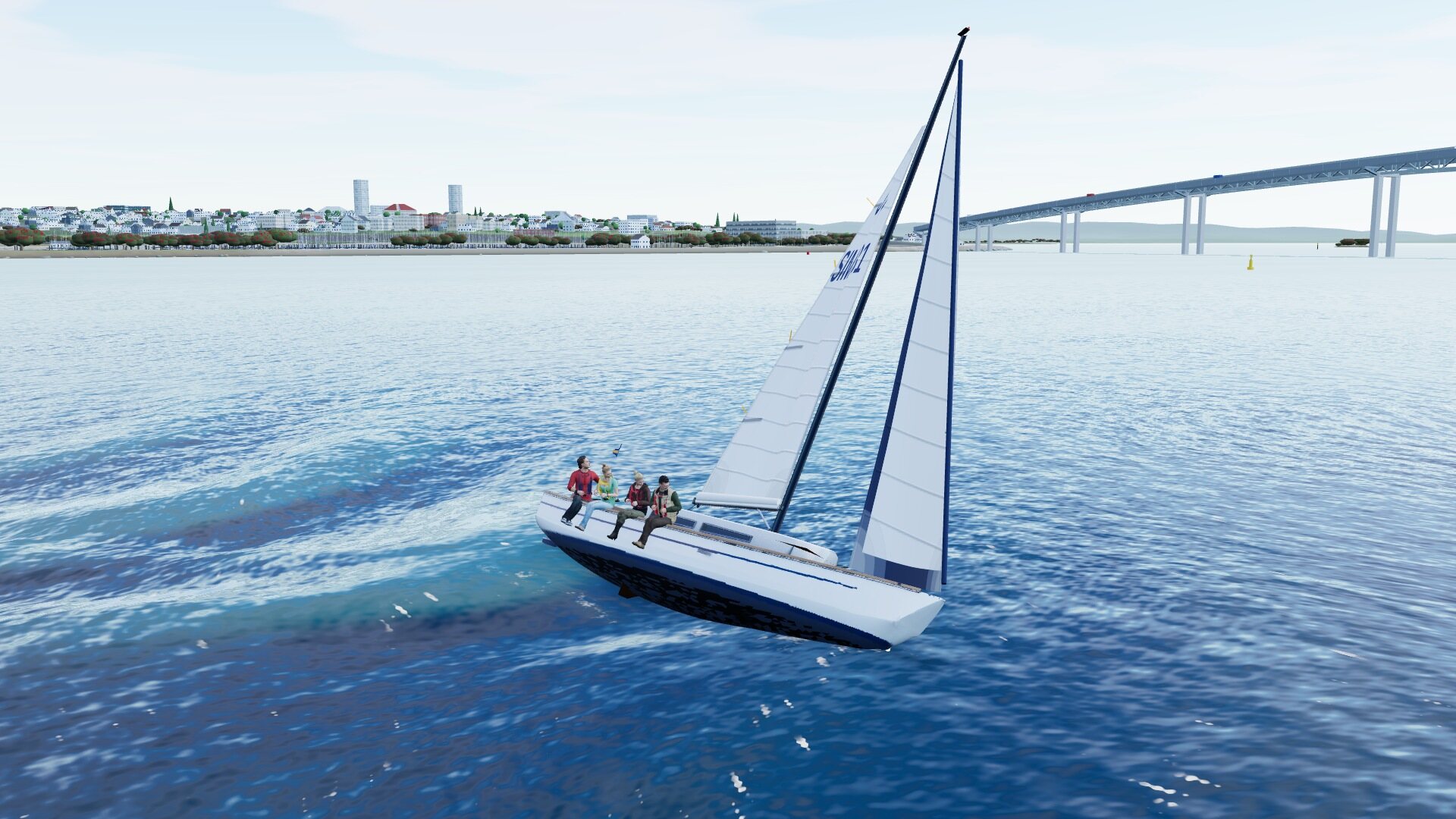
Wind strength is measured in knots, nautical miles per hour; one knot is a little under two kilometres an hour. Forecasts also use the Beaufort scale, which describes the wind by its effect on the sea.
The Beaufort scale
| Force | Knots | Description | At sea | For a yacht like this |
|---|---|---|---|---|
| 0–1 | 0–3 | Calm, light air | Mirror-flat, or ripples | Not enough to sail |
| 2 | 4–6 | Light breeze | Small wavelets | Gentle sailing |
| 3 | 7–10 | Gentle breeze | Large wavelets, a few crests breaking | Ideal for learning |
| 4 | 11–16 | Moderate breeze | Small waves, frequent white horses | Good sailing; reef as it builds |
| 5 | 17–21 | Fresh breeze | Moderate waves, many white horses | First reef; experienced crews |
| 6 | 22–27 | Strong breeze | Large waves, white foam crests, spray | Second reef; stay in port if inexperienced |
| 7 | 28–33 | Near gale | Sea heaps up, foam blown in streaks | Deep reefed; best avoided |
| 8+ | 34+ | Gale | High waves, crests blown into spindrift | Stay in port |
Gusts can be much stronger than the average wind, especially near land, and a forecast of “15 knots gusting 25” needs the same respect as a steady 25.
Too much sail
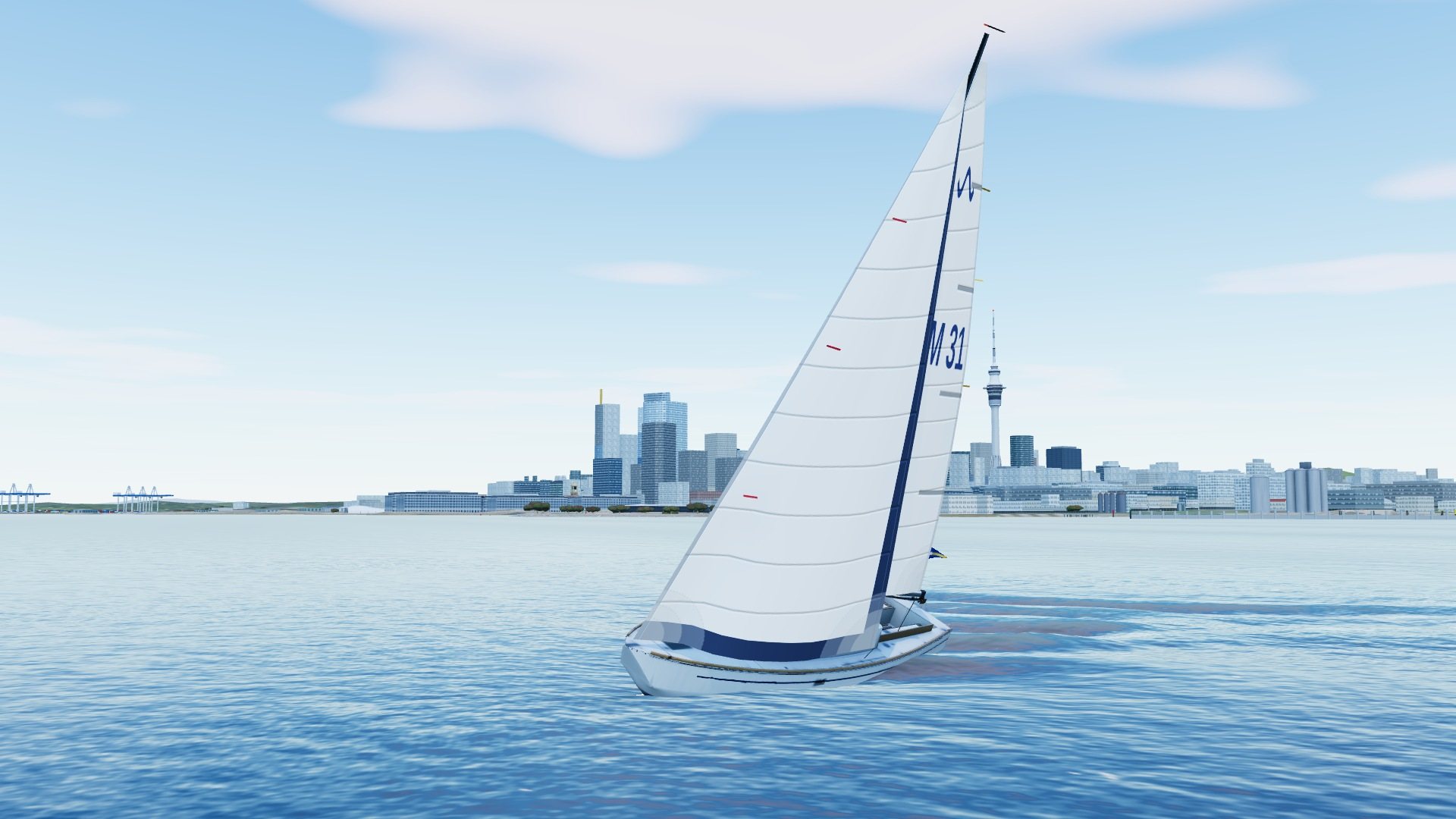
The signs that a boat has too much sail up are easy to read: she heels more than about 20 degrees, you have to hold the tiller hard to windward all the time, and in the gusts she rounds up, turning into the wind on her own however hard you pull. She’s also slower, because the sails are spilling wind and the keel and rudder are losing their grip.
Easing the mainsheet or dropping the traveller spills wind from the mainsail, and that is the answer to an occasional gust. If you are doing it all the time, it is time to make the sails smaller.
Heaving-to
Before putting a reef in, it helps to stop the boat, and the way to stop a sailing boat is to heave-to. Heaving-to is also a way to stop for lunch, to sort out a problem, or to give a seasick crew a rest.
- Sailing close-hauled, tack the boat, but don’t let the jib across: leave it sheeted on the old side, so it’s backed.
- Let the mainsheet right out.
- Push the tiller to leeward, as if you were trying to turn back up into the wind, and tie it there.
The backed jib pushes the bow away from the wind and the rudder turns it back, and the two balance. The boat settles about 50 to 60 degrees off the wind, drifting slowly sideways, and the motion becomes much quieter. She is still moving: she drifts downwind, and with the tide, at a knot or so, so heave-to only with clear water to leeward, and keep a lookout. To sail on, untie the tiller, let the jib across, and bear away.
Reefing
Most mainsails have one or two rows of reef points across them. Putting in a reef lowers the sail to one of these rows and ties the spare sail along the boom, making the sail smaller and its centre of effort lower.
- Heave-to, or sail close-hauled with the mainsheet eased so the sail is flapping.
- Ease the kicker, and take up the topping lift if the boom has one, so the boom doesn’t drop.
- Ease the halyard, so the sail comes part of the way down.
- Hook the reef cringle, the ring at the front end of the row of reef points, onto the hook by the mast.
- Pull the halyard tight again.
- Pull in the reefing line, which pulls the new clew, the cringle at the leech end of the row of reef points, down to the boom and out along it. Tie up the loose sail with the reef ties if it has them, round the bundle of sail only, not round the boom.
- Ease the topping lift, tighten the kicker again, and sheet in.
If there is still too much power, roll away some of the jib as well. Reduce both sails together, so that the boat stays balanced. Shaking a reef out when the wind drops is the same steps in reverse.
The forecast
Check the forecast before you go out, and again during the day if you are out for long. In New Zealand, MetService issues coastal marine forecasts for each stretch of coast, and recreational forecasts for the busiest boating waters, including one for Auckland that covers the Hauraki Gulf and the Waitematā Harbour. Maritime Radio broadcasts the forecasts on VHF at set times, and Coastguard broadcasts automated weather reports on its own VHF channels. Look at the wind strength and the gusts, the direction and when it’s expected to change, and the sea state.
If strong winds are expected, put the reef in before you leave the marina, where the water is calm. Putting one in when you are already overpowered is hard, wet work.
Check yourself
Answer each one from memory before you look at the answer; recalling it is what fixes it in your mind. Tap an answer to check it.
-
Which of these tells you it is time to reef?
Try it in the simReefing in a blowShow the answer
D. She heels past about 20° and fights the tiller to round up. Too much heel and strong weather helm mean she is overpowered: slower, harder to steer and harder on the crew.
-
When you are hove-to, where are the jib and the tiller?
Try it in the simHeaving-toShow the answer
A. The jib backed (held on the windward side) and the tiller lashed to leeward. The backed jib pushes the bow away from the wind and the rudder turns her back up: they balance, and she lies quietly.
-
What is the order for putting in a slab reef?
Try it in the simReefing in a blowShow the answer
A. Ease the halyard, hook the tack, tighten the halyard again, then pull in the reefing line. Halyard down, tack on the hook, halyard back up, then the reefing line pulls the new foot down to the boom.
-
How do you back the jib without touching its sheet?
Try it in the simHeaving-toShow the answer
D. Tack, and leave the jib sheeted on the old side. Tack as usual but don’t let the jib across: it stays on the old side, which is now the windward side.