
Textbook of Sailing
How to sail a yacht, from your first day aboard to your first race. Read a chapter, then try it out in the free simulator of Auckland’s Waitematā Harbour.
Filmed in the simulator: the Waitematā Harbour, Auckland
About this book
This book goes with a free simulator that recreates Auckland’s Waitematā Harbour, a 9.3 metre cruising yacht, the wind, the waves and the tides, and the harbour’s traffic, closely enough to learn on.
The chapters follow the order you’d learn in on the water: first what the parts of the boat are called and how a sail works, then the points of sail and how to trim, then the manoeuvres, from tacking to berthing in a marina, then safety and the rules, and finally your first race.
- Read a chapter. Each one is short, with photographs and diagrams of the same boat you’ll sail.
- Try it in the simulator. At the end of each chapter, the lessons that go with it open straight in your browser.
- Go sailing. No book or simulator replaces time on the water with a good instructor, but you will start your course knowing the words and the ideas.
Contents
Part one · First principles
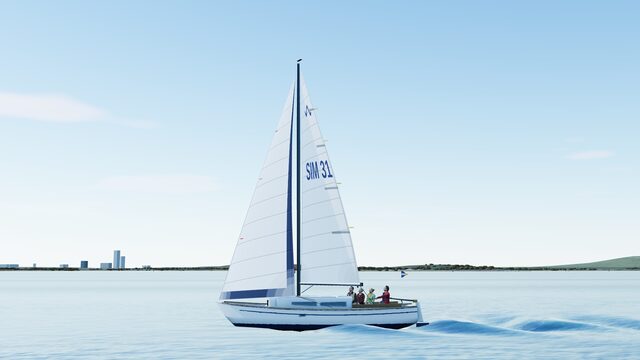
The sailing boat
Before you can sail a boat you need to be able to talk about one. This chapter goes round a typical cruising yacht from bow to stern, and introduces the words you’ll hear on every boat you step aboard.
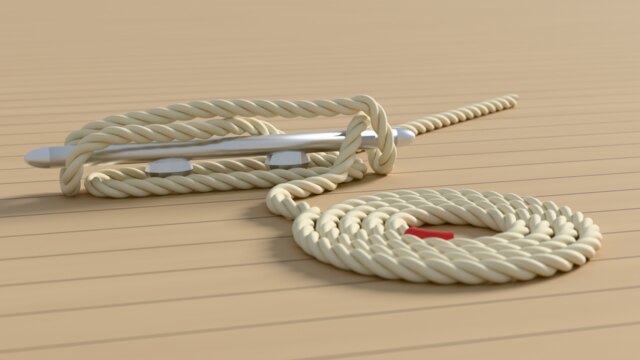
Ropes and knots
A yacht is rigged with rope, and much of a crew’s work is pulling it, letting it out, coiling it and making it fast. This chapter is about the rope itself, how to look after it, and the eight knots that do nearly everything on board.
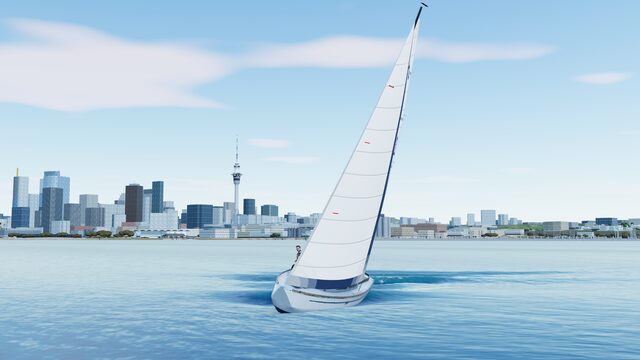
How sailing works
A boat can sail across the wind and even towards it. This chapter explains how the sails and the keel work together to make that possible, and why a boat heels.

Points of sail
A sailing boat cannot sail straight into the wind. There is a zone either side of it where she cannot sail at all, and each of the other directions has its own name and its own way of setting the sails.
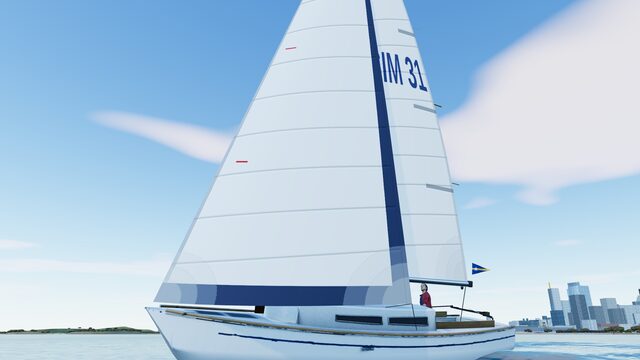
Trimming the sails
Telltales on the jib show when to pull the sheet in and when to let it out. Other controls change the shape of the sails to suit the wind and the sea.
Part two · Handling the boat
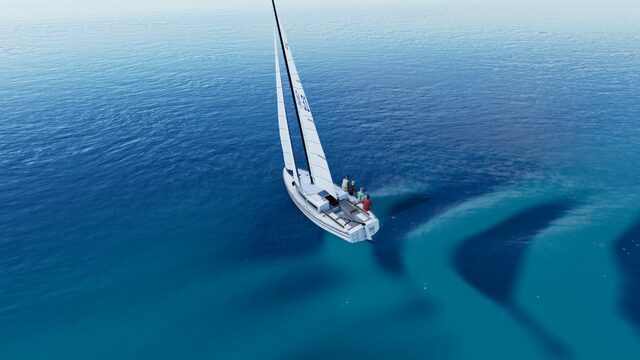
Steering and tacking
A tiller turns the boat the opposite way to the way you move it, which takes a little getting used to. This chapter covers steering, and then the tack, the manoeuvre you will make more often than any other.
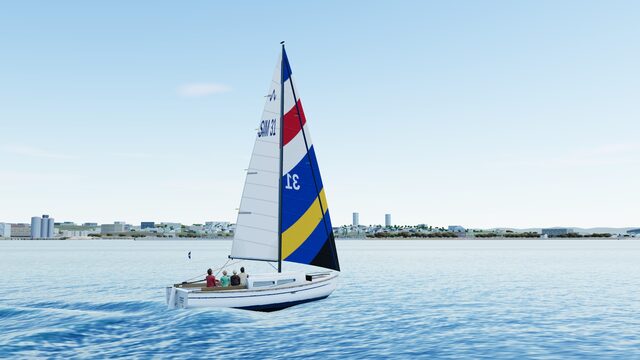
Gybing and sailing downwind
Turning the stern through the wind is called gybing. Done carelessly it can be violent, and it causes many injuries on yachts; done properly it is gentle and safe.
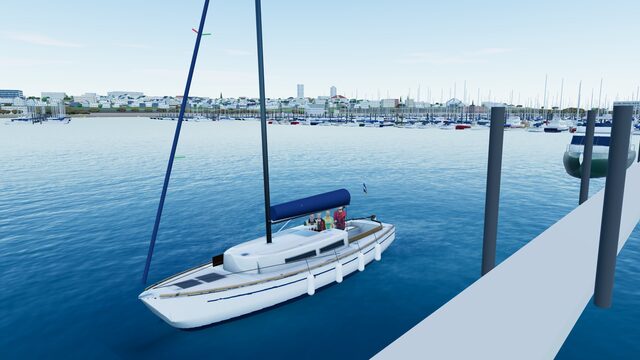
Under power, and in the marina
Most yachts have a small diesel engine for getting in and out of harbour. Handling a boat in a crowded marina is a skill of its own, and most of it comes down to going slowly.
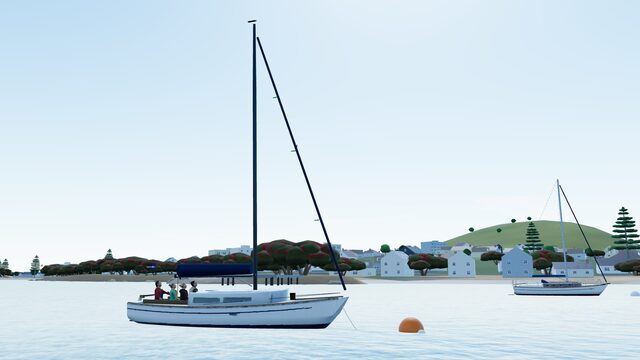
Anchoring and moorings
To stop for lunch or for the night in a quiet bay, you either pick up a mooring or anchor. This chapter covers how to do both.
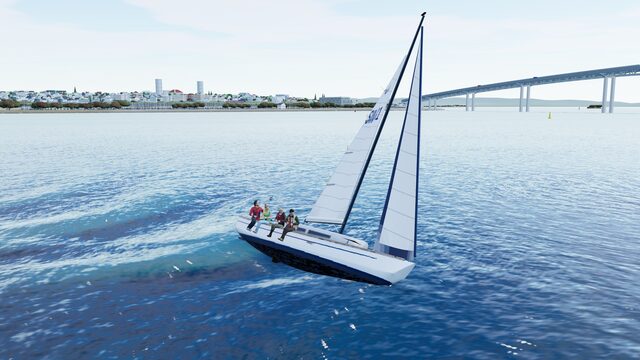
When the wind gets up
A boat heeled right over is not going fast; she is overpowered. Reducing sail makes her more upright, easier to steer and usually faster, and the time to do it is the first time you think of it.
Part three · Safety and the rules
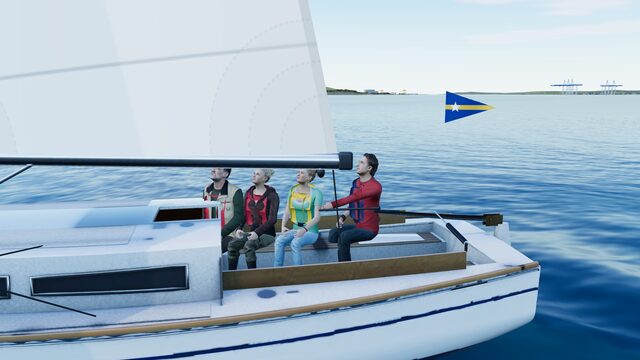
Safety on board
Sailing is safe when it is done with care. Most accidents can be prevented by good habits and the right equipment, and most of the rest can be dealt with if you know how to call for help.
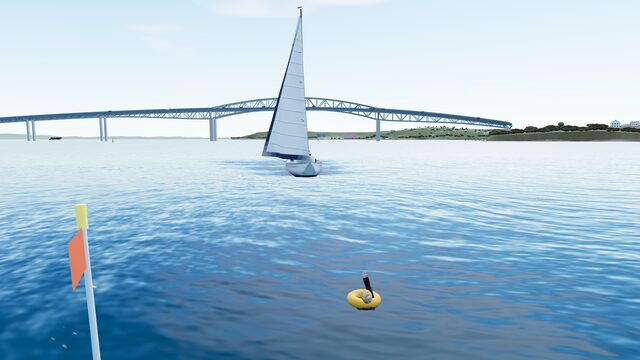
Man overboard
Someone falling overboard is the emergency every crew should practise for. Within seconds the person in the water is hard to see, and the boat is sailing away from them.

The rules of the road
Out on the water, as on the roads, there are rules about who gives way. They are set out in the International Regulations for Preventing Collisions at Sea, usually called the collision regulations or COLREGs, which New Zealand applies through Maritime Rules Part 22.
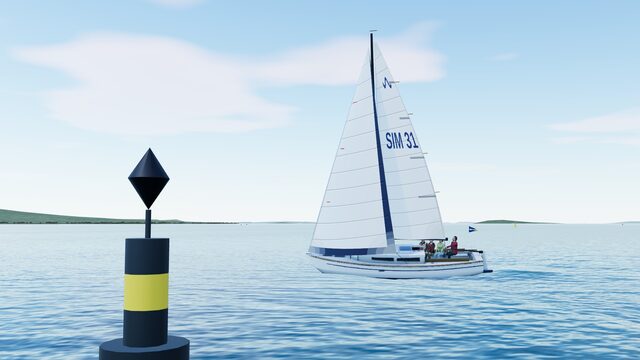
Buoys, charts and tides
Buoys and beacons show you where the safe water is. Charts tell you what’s under it, and the tides change how much water there is, and which way it’s moving.
Part four · Going further
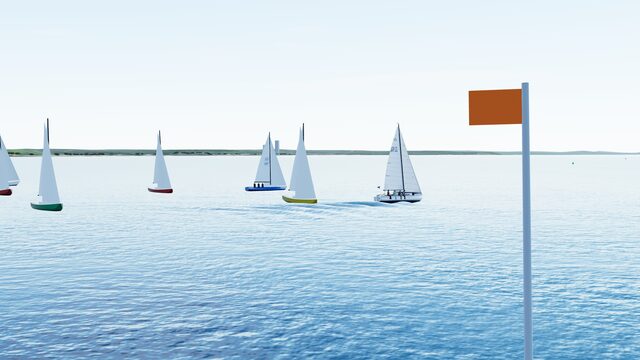
At the back
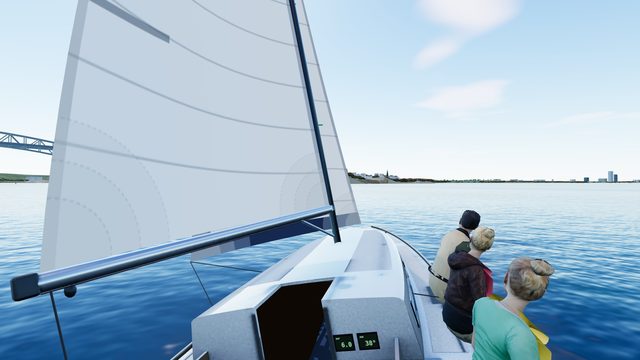
The simulator
The Textbook of Sailing simulator runs in your web browser, on a computer or a phone. Its Academy has a lesson for each part of this book, from the parts of the boat to berthing in the marina, man overboard and the rules of the road, and you can sail the harbour freely or race a fleet.